
What is microdosing?
Defining Microdosing Once and for All
The term microdosing has firmly entered the mainstream wellness conversation, but if you look for a definitive framework of what the practice actually is, you will not find one.
For years, I hosted group coaching calls, teaching individuals how to microdose with psilocybin. I always started those sessions by attempting to ground the practice in an official, institutional definition.
It did not take long to notice a recurring pattern: the descriptions handed down by medical media and dictionaries were incomplete, inconsistent or simply ambiguous. In fact, mainstream science openly admits it does not have an agreed-upon scientific definition for microdosing.
Because there is no universal consensus, the conversation has become confusing at best and inaccurate at worst. I feel it’s high time (pun intended) to draw a line in the sand.
We need to stop waiting for institutional consensus and assert a comprehensive standard that reflects the true nature of the practice.
The Fragmented Institutional Framing
To understand why a clear standard is necessary, let’s look at how various mainstream sources currently attempt to frame the practice of microdosing with magic mushrooms:
- Mainstream Dictionaries typically view the practice through a rigid, pharmacological lens, defining it as administering very small amounts of a drug to test or benefit from its physiological action while minimizing side effects.
- Crowdsourced Platforms characterize it as using sub-threshold, non-intoxication doses of psychedelic drugs in an attempt to improve creativity, energy, or emotional balance.
- Clinical Research Frameworks focus strictly on sterile pharmaceutical math. A landmark consensus study published in the Journal of Psychopharmacology notes that the technical, laboratory baseline for a microdose is a dose that constitutes roughly 1% of a standard active dose. Such a rigid threshold stems from early pharmaceutical drug-testing standards, which intentionally strips away the behavioral reality and the human element of the practice.
The Three Imperative Pillars of Microdosing
A real definition cannot just be a measurement of weight or a percentage of a drug. It must encompass the behavioral framework, the timing, duration and the ultimate purpose. In order to establish an authentic standard; three critical pillars must be locked into the definition.
1. Dosage: No Buzzing. No Tripping.
Psilocybin microdosing by definition is sub-perceptual, meaning there is no sense of intoxication whatsoever. Feeling a buzz, a high, or mild visual alteration is perfectly fine, but it is not a microdose. Such an experience falls into the category of an entertainment, museum, or hero dose. Because true microdosing operates entirely beneath the threshold of intoxication, institutional frameworks wrongly assume nothing significant is happening.
2. Microdosing Schedule: Why Rest Days Matter
Mainstream frameworks speak about microdosing as if it were a daily pharmaceutical prescription. In reality, microdosing is an intuitive, short-term practice, not a daily routine. Rest days are vital to the process. They provide dedicated moments of integration post-dosage, often experienced as "afterglow" days. Think of the afterglow as the exact opposite of a hangover.
The most widely used framework is the Fadiman Protocol, developed by researcher James Fadiman, which follows a one day on, two days off microdosing schedule. This rhythm has become the most common starting point for people new to the practice.
Instead of feeling like our system is in deficit, we typically experience a lingering state of mental clarity, and an enhanced mood that persists even when not microdosing.
The term afterglow is a scientifically recognized phenomenon studied as far back as 1969 in literature detailing peak experiences. More recently, data published in various medical journals supports these narrative reports, concluding that a subacute psychedelic afterglow correlates with positive changes in how we perceive ourselves, others, and our environment.
It’s worth noting that many people confuse psilocybin afterglow with tolerance. Chemical tolerance relates to chasing a dragon because the brain no longer responds to a substance the same way. An afterglow is completely different. It is defined as the window to neural flexibility, driven by the downregulation of the brain’s default mode network (DMN).
By damping down the DMN, which is responsible for repetitive, self-referential thought patterns and mind-wandering, microdosing allows a state of mental clarity and emotional ease to linger well after the substance’s direct presence has cleared.
A daily microdose is not needed because the beneficial effects continue to work during the rest, or off, days.
3. Wellness and Growth, Not Symptom Management
Conventional medical frameworks look at substances exclusively through the lens of symptom management or clinical treatment. They treat compounds as tools to suppress a deficit. In reality, microdosing with magic mushrooms functions as an adaptogen for personal growth and personal agency. It is a proactive, intentional practice in service of your own wellness, whether that looks like self-optimization, personal growth, emotional healing, or simply feeling more like yourself. It is not a clinical tool designed to suppress a symptom.

Defining the Standard
I urge the psychedelic community and fellow citizen scientists to join me in establishing this definitive standard. If we define the practice first, mainstream science is bound to eventually catch up.
A comprehensive definition must include all three pillars of the experience: dosage, microdosing schedule / protocol, and self improvement.
The Comprehensive Definition of Microdosing Is:
“Microdosing is the practice of consuming sub-perceptual doses of a psychoactive compound on an intermittent and temporary basis for the purposes of wellness and self-improvement.”
When we define this practice comprehensively, we fundamentally optimise our interaction with these compounds, adjust our expectations, and achieve better outcomes.
This updated and comprehensive definition allows us to move away from the clinical reductionism and ambiguity of simply consuming a “small” amount of a substance, and move toward an intentional, intuitive protocol designed to serve us in the most beneficial ways possible.
For those feeling called to explore microdosing as part of their own journey toward clarity and wellbeing, the quality of what you consume matters.
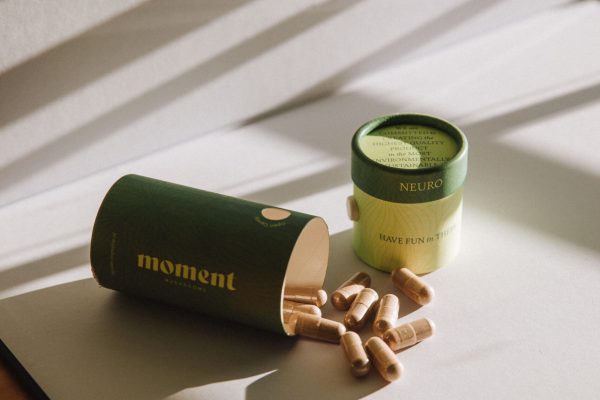
To integrate these concepts into your life, then check out our Moment Mushrooms Microdose Collection. Here you can find premium, mindfully crafted capsules that support your microdosing practice every step of the way.
– Written by Asha Sultana
Frequently Asked Questions About Microdosing
What is microdosing?
Microdosing is the practice of consuming sub-perceptual doses of a psychoactive compound, most commonly psilocybin, on an intermittent and temporary basis for the purposes of wellness and self-improvement. A true microdose produces no intoxication or perceptual alteration.
What is a sub-perceptual dose?
A sub-perceptual dose is an amount small enough that you do not feel high, buzzed, or visually altered. You are fully functional and present. Most people describe the effect as subtle, a quiet lift in mood, focus, or emotional ease rather than any noticeable altered state.
What is the Stamets Protocol?
The Stamets Protocol is a microdosing schedule developed by mycologist Paul Stamets. It follows a rhythm of four days on, three days off, and is typically paired with lion’s mane mushroom and niacin, a combination Stamets refers to as the “Stacking Protocol.” The lion’s mane is believed to support neurogenesis and cognitive function, while niacin is thought to act as a carrier, helping the compounds reach the peripheral nervous system more effectively. Many people find the Stamets Protocol well suited for those focused on long-term brain health, neuroplasticity, and cognitive recovery.
The Neuro 165mg capsule was formulated with the Stamets Stack in mind
What is the Fadiman Protocol?
The Fadiman Protocol is the most widely used microdosing schedule, developed by psychedelic researcher James Fadiman. It follows a simple rhythm of one day on, two days off, repeated over four to eight weeks. The rest days are considered just as important as the dose days, allowing for integration and the psilocybin afterglow effect to unfold.
How often should you microdose?
Most practitioners recommend an intermittent schedule rather than daily use. The Fadiman Protocol of one day on, two days off is the most common starting point. Daily microdosing is generally discouraged because tolerance builds quickly and the rest days are where much of the benefit is thought to occur.
What is the psilocybin afterglow effect?
The afterglow is a scientifically recognized phenomenon where the positive effects of a microdose, including improved mood, mental clarity, and emotional ease, persist on the days following a dose. It is the opposite of a hangover. Rather than feeling depleted, many people report feeling more present, open, and connected on their off days.
What is the difference between microdosing and a full dose?
A microdose is sub-perceptual and produces no intoxication. A full dose, sometimes called a macro dose or hero dose, produces significant perceptual and psychological effects including altered thinking, visual changes, and emotional depth. They serve different purposes and require different levels of preparation and support.
What are the benefits of microdosing psilocybin?
People report a wide range of benefits including improved mood, reduced anxiety, greater emotional resilience, enhanced focus and creativity, and a deeper sense of connection to themselves and others. It is important to note that individual experiences vary and outcomes are not guaranteed.
Is microdosing safe?
For most healthy adults without a personal or family history of psychosis or bipolar disorder, and who are not taking contraindicated medications such as SSRIs, SNRIs, or certain cardiovascular medications, microdosing is generally considered low risk. We always recommend consulting with a knowledgeable healthcare provider before beginning any new practice.