
Moment Mushrooms
HOW to MICRODOSE MUSHROOMS and EXPLORE HIGHER DOSES

To Start
What are Magic Mushrooms?
Mushrooms, such as psilocybin cubensis, contain psilocybin, the compound responsible for their psychedelic effects. When ingested, psilocybin is converted into psilocin. Psilocin looks a lot like serotonin, so it binds to the same receptors in the brain.
At high doses, this psilocin interacts with the brain by suppressing serotonin receptors and inducing the psychedelic experience. At lower doses, called a microdose, many people find benefits to their wellbeing, without the psychedelic effects. Additionally, our products may include other mushrooms like cordyceps, which offer health benefits but do not contain psilocybin.
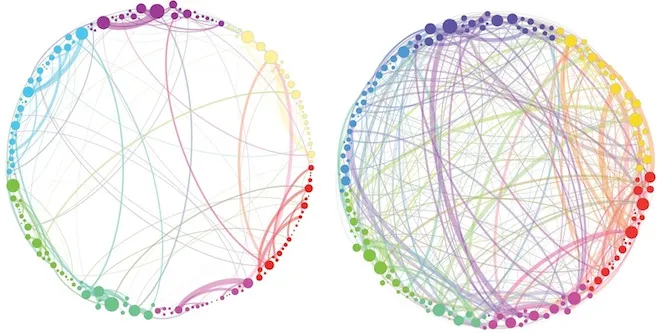
Communication between brain networks in people given psilocybin or a nonpsychedelic compound . Communication between brain networks in people given psilocybin (right) or a non-psychedelic compound (left)
How do they work?
The Science of Psilocybin
Many fungi and plants, like magic mushrooms, contain compounds with various benefits for humans. Psilocybin is the active ingredient in magic mushrooms that produces their psychedelic effect. Psilocybin is a psychedelic tryptamine that resembles serotonin, a mood stabilizer. This then binds to serotonin receptors in the brain, suppressing filtering mechanisms and allowing different information to reach consciousness, resulting in new ways of thinking, and at sufficient dosage – hallucinogenic effects and altered perception.
By blocking serotonin receptors, psilocybin facilitates communication between normally unconnected regions of the brain, potentially rewiring it. This rewiring has the potential to disrupt unhealthy thought patterns associated with mental health issues like anxiety, depression, and addiction.
Moreover, psilocybin slows down activity in the default mode network (DMN), promoting a sense of presence in the moment. The DMN is responsible for rumination and worrying about the past and future, aligning with our brand slogan “empower the present.” A 2025 study in Cell from Cornell traced the mechanism in detail.
Know your dose
Dosing Guide
There is no one-size-fits-all solution for determining what dosage to begin with. However, almost everyone recommends starting with mushrooms slowly and gradually. This has the advantage of allowing you to truly understand how the experience affects you at various dosages while also allowing you to gradually increase your dosage.
All doses below are given as dried weight of whole mushrooms, measured in milligrams (mg) and grams (g) – 1,000mg equals 1g. Dried weight is the standard because fresh mushrooms are mostly water. These numbers refer to the whole dried mushroom, not pure synthetic psilocybin (which simply isn’t available and we would choose the full mushroom anyway for the other naturally occurring companion compounds).
Dosing isn’t either/or. It’s a continuum, and you can land anywhere along it. In practice, though, most people approach mushrooms through one of two frameworks. Microdosing stays below the perceptual threshold: no high, and no change to your perception. Full dosing crosses that threshold deliberately, from a light museum dose to a deep hero journey. Wherever you land on the spectrum, start low and go slow.
Approach one
Microdosing
Sub-perceptual · taken on a routine · nothing to feel
Low
Gentle entry point for first-timers
30 – 100mg
Medium
The sweet spot most settle into
100 – 200mg
High
A noticeable, still-functional lift
200 – 400mg
Approach two
Full Dosing
Perceptual · the classic psychedelic experience · set & setting matter
Museum
Light and social, feet on the ground
0.4 – 1.5g
Full
The complete psychedelic experience
2 – 3.5g
Hero
Deep journey for experienced users, with a sitter
5g+

How To Microdose Mushrooms
What is Microdosing?
Microdosing is the practice of taking roughly one tenth of a journey dose, an amount so small it is considered sub-perceptual. You should not perceive or notice any of the traditional psychedelic effects, yet experience both physical and mental health benefits. A microdose is designed to disappear into your day, usually as a single small capsule. Sub-perceptual does not mean nothing is happening: the compound is still active beneath the surface, which is why the practice is judged over weeks, not hours. And a useful rule of thumb: if you feel high, you have taken more than a microdose.
There is nothing wrong with simply taking a single capsule as the mood or need arises. Most microdosers find, though, that the practice gives the most back when it follows a protocol: a rhythm of dosing days and rest days. Rest days matter because tolerance builds quickly; dose several days in a row and the same amount does less.
There is no best protocol, only the one that fits the shape of your week. Start low (30 to 100mg), pick a rhythm you can keep alongside your existing routine, run it for four weeks, then take a two-week reset. The two most famous protocols are the Fadiman (one day on, two days off) and the Stamets (four days on, three days off). Both are mapped out in the visual below.
Research is still early, but microdosers commonly report:
Reduced anxiety and depression
Increased creativity
Improved focus & concentration
Feelings of happiness, peace, and an appreciation of life
Enhanced cognitive function
and memory
Heightened energy, sociability, and productivity
How To Journey
What is Full Dosing?
A full dose, sometimes called a journey, is a full experience: anywhere from the gentle brightening of a ‘museum’ dose to the complete immersion of a hero dose. What can happen? Senses sharpen, emotions open up, and at classic doses many describe moving patterns, heightened emotion and a deep sense of connection. This is the territory people mean when they talk about a psychedelic journey.
A journey asks more of you than a microdose does, and it is a genuinely complex subject. The essentials below will get your decisions pointed the right way; the full guide covers the details and complexities.
Set
Come to it rested, settled and with an intention. Your state of mind walks in the door with you.
Setting
Somewhere safe and comfortable where you have no obligations. Journeys do not run on a clock.
Intention
Know why you are going in, and write it down somewhere visible. An intention is an anchor: a place to return to if the going gets tough.
Guide
A sober person you trust to watch over the journey. This can be a friend, a trained guide or a therapist, especially for first journeys and larger doses.
Integration
The days after matter. Rest, write things down, and give the experience room to settle.
One thing preparation cannot change: mushrooms do not offer a predictable ride. A common analogy is sitting in the back seat of a car. You can influence the driver, but the mushrooms are driving; you may want to go left, and they go right.
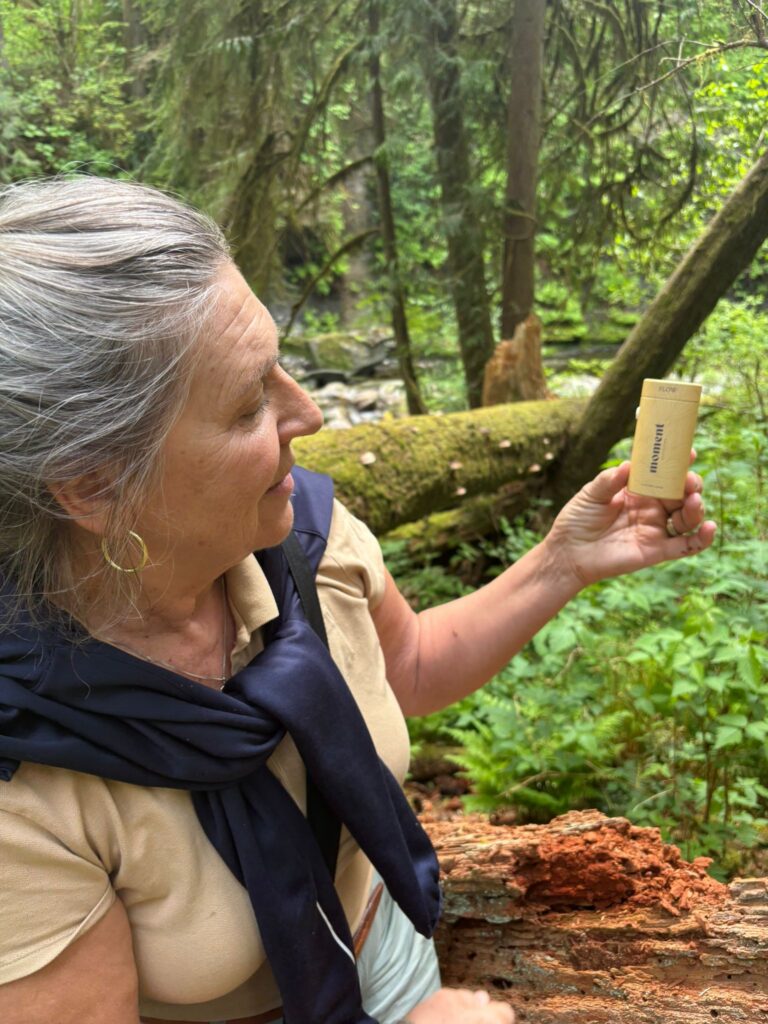
A word on healing
Clinical research at institutions like Johns Hopkins and Imperial College London has been studying psilocybin for depression, anxiety, addiction and end-of-life distress, and many people describe a well-prepared journey as one of the most meaningful experiences of their lives and can have drastic results. The conditions seem to do much of the work: a clear intention, a safe setting, support on the day, and honest integration afterwards. None of this makes a journey a guaranteed cure, and it is not a substitute for care you may already be receiving. Approached seriously, though, with the right conditions in place, deep journeys have been a path toward different kinds of healing for many people.
A journey gives back what you put into preparing for it. When you feel ready to go deeper, the full guide walks you through every step: planning, the day itself, and the days after. Beyond that, our support page gathers resources and links to trusted psychedelic guides, and if you want help choosing one, read how to find a psychedelic guide.
Settling the Stomach
About the Nausea
The most common physical complaint with mushrooms is a wave of queasiness on the come-up. It is usually mild, it usually passes, and it is worth understanding rather than fearing.
Why it happens
1
The fiber
Mushroom cell walls are built from chitin, a fiber our digestive enzymes barely touch. Raw dried flesh is slow, hard work for the gut.
2
The serotonin surge
Your body turns psilocybin into psilocin, a close cousin of serotonin, and most serotonin receptors line the gut. It reacts as if serotonin just spiked.
3
The gut-brain hotline
The vagus nerve, the same circuit behind motion sickness, carries the message upstairs. Dose, hydration and your own sensitivity set the volume.
How to prevent it
- Empty stomach: wait four or more hours after a light, simple meal
- Give the gut less work: chew thoroughly, grind fine, or take capsules
- Brew a tea and strain out the solids, so the chitin never goes down
- Ginger before and during is the classic settler
- Stay hydrated; it helps more than people expect
This is exactly why our mushroom tea and chocolate exist: the same mushrooms, with far less for your stomach to break down.
The lemon tek
Some people love using what’s called LemonTek. Grind, soak in lemon juice for fifteen to twenty minutes, drink. The acid is believed to start converting psilocybin into its active form before you swallow, sparing the stomach but bringing a faster, stronger come-up, so take less than you otherwise would. No clinical study has tested it.
If it arrives anyway
For most people the queasiness crests as the journey begins and fades as the peak arrives. Do not fight it. Settle somewhere comfortable, breathe slowly, take small sips of water or ginger tea, let fresh air reach your face, and move gently if you move at all.
At larger doses, some people do throw up, and most feel dramatically better right afterwards. Experienced users treat it as a passing part of the process: not an emergency, and not a verdict on your journey. If vomiting is relentless or comes with symptoms that frighten you, treat it like any other medical situation and get help.
Settling your stomach is one small part of preparing well. The full guide covers the rest.
Personalized Support
We would love to answer your questions or connect you with someone who can support you.
Please reach out to us at:
hello@momentmushrooms.com
We offer discounted one on one calls for you to unlock deeper insights and receive individualized assistance on your journey with our Zoom consultation service, in partnership with Dana Harvey of The Flourish Academy.
Whether you’re curious about starting, need guidance on microdosing, or are seeking support around a full journey, our one on one sessions offer tailored advice and expert insights from an esteemed Psychedelics and Microdosing Educator.
Book your session today, and step into your full potential with confidence.
–
Looking for community? Our friends at The Flying Sage believe in a world where everyone has safe and equitable access to psychedelic medicines. They stand for ethical decriminalization and legalization occurring simultaneously.

Getting Started
Finding Your Dose
The guide above shows where most people land, but psilocybin affects everybody differently, and your number is found, not assigned. The same dose can feel like very little to one person and like quite a lot to another. So instead of picking a weight, start with what you’re looking for, begin at the low end of it, and dial it in from there.
Start with your intention
What do you want from the experience? That points to your starting dose.
The microdosing path
Stay fully functional
You want mushrooms to fit into normal days: work, training, projects. Microdosing is sub-perceptual by design, so there is nothing to feel and nothing to manage.
The full dosing path
A first journey
You are curious about the other side and want to start light. A museum dose is perceptual but modest, and a common choice for a first full experience, ideally with company you trust.
Start around
0.5 – 1g · museum
Shop: Dried mushrooms
A deeper journey
You are after introspection and the full psychedelic experience. Clear your schedule, mind your set and setting, and take it seriously.
Start around
2 – 2.5g · full dose
Shop: Dried mushrooms
Then dial it in
Expect a little trial and error. That is the method, not a mistake.
1
Start below
Begin at the bottom of your range. You can always take more next time; you cannot take less today.
2
Notice and note
Write down what you took and how the day or journey felt. Patterns show up quickly on paper.
3
Repeat before changing
Give the same dose two or three tries before judging it. One odd day proves nothing.
4
Adjust gently
Move in small increments, 25 to 50mg for microdoses and 0.25 to 0.5g for full doses, until it fits.
For full doses, leave at least a week or two between journeys. Tolerance builds quickly and resets with rest.
Why doses affect everyone differently
Two people can take the same dose and have very different experiences. A few reasons why:
Body & metabolism
Weight and chemistry change how psilocybin is absorbed
Strain & potency
Mushrooms vary in strength from batch to batch
Stomach contents
An empty stomach hits faster and harder
Tolerance
Recent use dulls the effect until you rest
Set & setting
Mindset and place shape the experience
Important Precautions
Are Magic Mushrooms Safe?
Psilocybin mushrooms are generally safe with minimal harmful effects. They are not chemically addictive, and while you cannot overdose on them, taking too much without preparation and experience can lead to a negative and uncomfortable experience. Hospital visits usually follow unintentionally large doses or difficult trips, not poisoning, and proper preparation, mindset and environment are the best prevention.
Johns Hopkins University School of Medicine advises following safety guidelines for both clinical and recreational use. The essentials are summarized below.
1 in 500
of nearly 10,000 users in the 2017 Global Drug Survey needed emergency medical care, the lowest of any recreational drug surveyed
Non-addictive
psilocybin is not chemically addictive and does not drive compulsive use the way substances like cocaine can
Bad trips, not poisonings
difficult experiences come from large unprepared doses; anxiety, paranoia and confusion, not toxicity
Avoid or take extra care
Pregnancy & age
Not recommended while pregnant or breastfeeding, or under 19
Mental health history
Avoid with a personal or family history of schizophrenia, bipolar or other psychotic disorders
Heart & blood pressure
Take extra care with heart conditions or uncontrolled high blood pressure
Mixing
Serotonin-affecting medications and some recreational drugs are a dangerous combination
HPPD
A rare condition where visuals or flashbacks linger after a trip
A note on safety and informed use
Psilocybin mushrooms are a powerful tool, and like any powerful tool they deserve respect and preparation. For most people microdosing is a gentle and well tolerated experience, but there are situations where extra care is warranted. If you are on any medications, have a personal or family history of psychosis, schizophrenia, or bipolar disorder, have a heart condition or uncontrolled high blood pressure, are pregnant or breastfeeding, or are simply unsure whether this is right for you, we encourage you to do your homework before starting. Many people have researched and learned about the promising results of studies on psilocybin as a treatment for depression, anxiety, and other mental health challenges. However, psychiatric medications can interact with psilocybin, and the three situations below deserve special attention.
SSRIs & antidepressants
They can significantly reduce the effects of psilocybin by competing for the same serotonin receptors; many people who feel nothing from microdosing are on SSRIs without realizing it. It does not mean psilocybin is not for you, but timing and preparation matter more. Speak with your doctor and watch this helpful resource on the interaction.
Lithium
Lithium is different: do not combine it with psilocybin. Case reports associate the combination with seizures, and clinical programs treat it as disqualifying. If you take lithium, this is a firm line rather than a judgment call.
Sustained daily microdosing
A 2024 review raised a theoretical concern: dosing frequently for long stretches without breaks stimulates a receptor linked to heart-valve strain. To be clear, this is theoretical and has not been observed in microdosers. It is one more reason protocols build in rest days and reset weeks.
We cannot give medical advice, and we strongly recommend consulting your medical professional. But you do not have to figure this out alone: these are two people we trust, and we send our own community to them.
Dana Harvey
Trained guide
Dana works with people at every stage of the journey, from preparation through navigation to integration, and offers a free discovery call to see where you are at.
Trina, The Dharmacist
Pharmacist · psychedelic drug interactions
Trina specializes in exactly the questions this section raises: how psilocybin sits alongside the medications you already take. The person to talk to before you change anything.
We are always available at hello@momentmushrooms.com to help you think things through. If cost is ever a barrier to that support, reach out and we will find a way to make it work.
This medicine has the potential to be genuinely transformative. We want everyone who comes to it to do so feeling informed, supported, and safe.
Are Magic Mushrooms Legal?
The short answer: No, they are not legal.
Are you going to get arrested for having magic mushrooms? No.
We have sent thousands and thousands of packages without issue.
First, a disclaimer: for legal advice, speak to a lawyer, not an article. What follows is the lay of the land as we understand it.
From the Government of Canada’s perspective, drugs are controlled through the Controlled Drugs and Substances Act (CDSA), and psilocybin, the active compound in magic mushrooms, is listed under Schedule III. Possession, sale and production are illegal unless Health Canada grants a licence or an exemption. One could stop there and say magic mushrooms are illegal, but that is not the complete picture.
There is a growing movement across Canada to change the course for magic mushrooms. Even the Government of Canada website says “There is increasing interest in the potential therapeutic uses of psilocybin.” (source) Licensed companies have been growing legal magic mushrooms under Health Canada licence since 2020.
Medical access is slowly opening. Since January 2022, Health Canada’s Special Access Program has allowed physicians to request psilocybin for patients with serious conditions where other treatments have failed, with roughly three hundred approvals granted in its first few years. Outside that program, individual section 56 exemptions technically exist but are basically impossible to get: the vast majority of applications are refused. The courts have started to push back, though. In 2025, the Federal Court of Appeal sided with healthcare practitioners seeking to train with psilocybin and ordered Health Canada to reconsider their exemption requests (source), and Alberta became the first province to regulate psychedelic-assisted therapy.
In Vancouver, the city council decided not to spend policing effort on magic mushrooms, and many dispensaries now operate openly across the city, much as cannabis dispensaries existed before legalization. As councillor Pete Fry said, “We’re in a serious overdose crisis where we’ve heard people describe this as a medicine … research is ongoing to look at this as a drug therapy treatment for drug addiction.” (source) In fact, the city has gone further than that and has “asked the federal government to exempt the city from part of the Controlled Drugs and Substances Act” (source). They aren’t the only ones: Montreal’s city council also voted to support decriminalization, and maybe one of the biggest signs of change is that even the police themselves have supported decriminalizing personal possession (source).
Recent Developments (2025–2026)
In June 2025, the Federal Court of Appeal in Toth v. Canada, 2025 FCA 119 reversed the lower court’s dismissal of a claim by health care practitioners seeking a Charter right to use psilocybin for training purposes via s. 56 exemptions.
In October 2025, an Ontario court dismissed a Notice of Constitutional Question challenging the federal psilocybin prohibition on freedom-of-thought grounds under s. 2 of the Charter (lead counsel’s responding analysis here).
In November 2025, Health Canada issued a s. 56(1) class exemption permitting participants in authorized clinical trials to take home and self-administer psilocybin or MDMA.
In June 2026, Conservative MP Corey Tochor introduced Bill C-286, a private member’s bill that would effectively legalize medical psilocybin by allowing physicians to prescribe it without case-by-case Health Canada approval. Per CBC, Health Canada has issued just 354 psilocybin authorizations since January 2022, a useful statistic illustrating current legal access.
More information can be found at:
www.psychedeliclaw.ca
The same shift is happening around the world, and it is running through medicine. Australia now allows authorized psychiatrists to prescribe psilocybin, Oregon runs licensed psilocybin service centers, Colorado opened its healing centers in 2025, and New Mexico passed a medical psilocybin program the same year.
Big changes are happening, and we are excited to be part of them.